
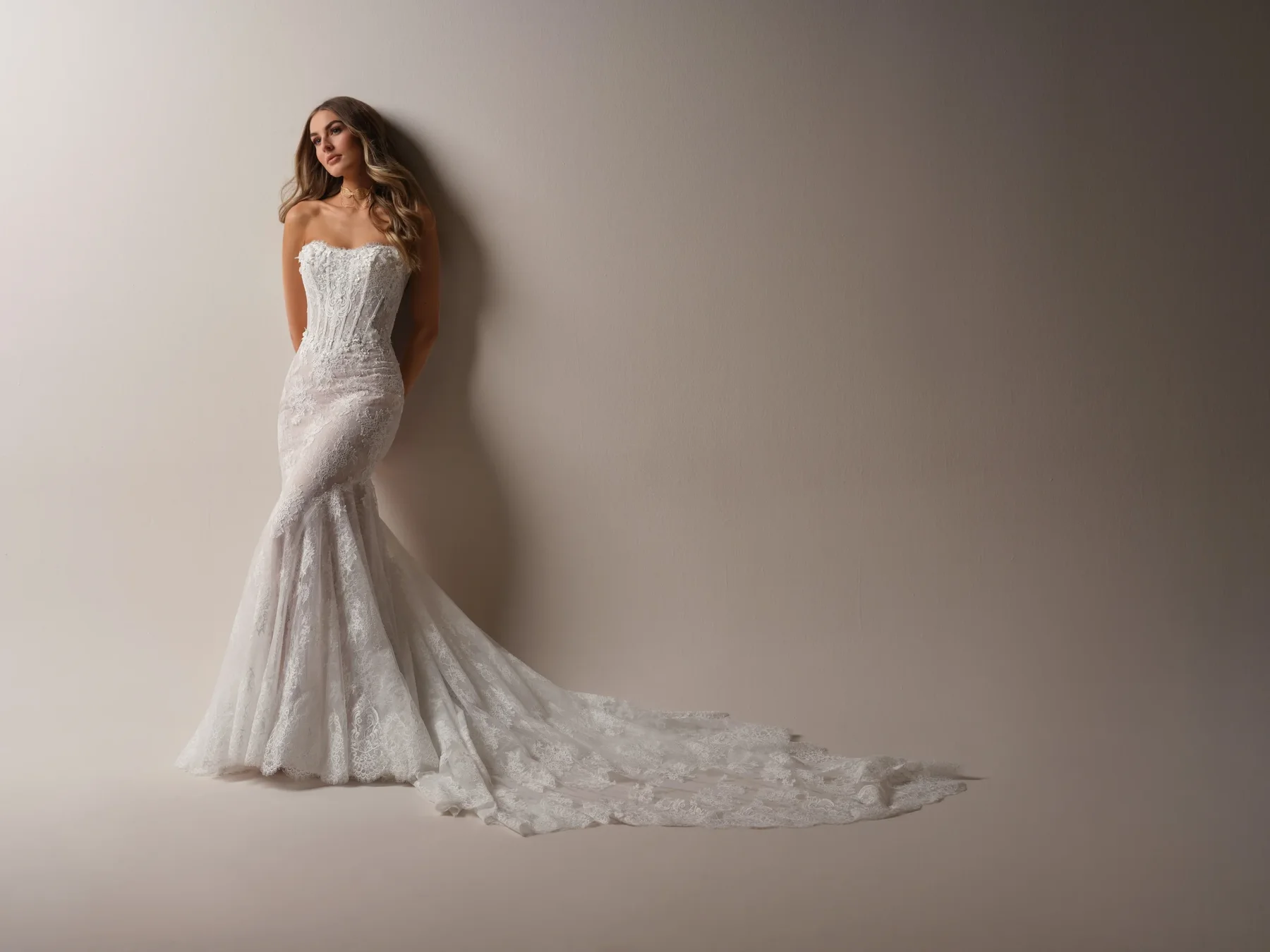
Choose the Perfect Wedding Dress for a Spanish Wedding
How to find a dress for the Spanish sun, the late nights and the setting you’ve chosen, from Marbella’s beach clubs to Andalusian fincas
Wedding dresses
Dressing for a wedding in Spain
A wedding in Spain is different from a wedding at home, and your dress should be too. The sun is stronger, the days run later and the celebrations last longer, and there are Spanish traditions you may want to borrow, from a lace mantilla to orange blossom in your bouquet.
Written by Vicky, wedding planner · Reviewed by Miriam, lead planner · Updated

This guide is about finding a dress that feels right for all of that: one that looks beautiful in Mediterranean light, keeps you comfortable from a sunny afternoon ceremony to dancing after midnight, travels well and suits the Spanish setting you’ve chosen, whether that’s a beach club in Marbella, a finca among olive trees or a whitewashed church. When you’re ready to shop, see our guide to wedding dresses in Marbella.
The short version
- Plan for strong sun, long days and a party that runs past midnight
- Consider a short or midi dress for heat, a civil ceremony or the party
- Pick light, breathable fabrics such as chiffon, crepe or organza for summer
- Cover your shoulders in Spanish churches, with a mantilla, bolero or veil
- Think about the ground: sand, grass, cobbles and steps
- Plan a lighter second look or a removable skirt for the party
- Order 9 to 12 months ahead to leave time for alterations
Why it’s different
What a Spanish wedding asks of your dress
Three things shape a wedding dress in Spain more than anything else: the climate, the timings and the culture.
The sun and the heat
From June to September, afternoons on the Costa del Sol are often over 30°C. Light, breathable fabrics and fewer layers matter far more than they would at home.
Long days, late nights
Spanish weddings start later and finish later. Ceremonies around 6pm, dinner at nine or ten and dancing past midnight mean your dress needs to be comfortable for ten hours or more.
Church customs
Catholic churches in Spain usually expect covered shoulders, so a bolero, a cape, long sleeves or a long veil is worth planning for.
Spanish traditions
Spain has a long bridal heritage. Brides here have worn lace mantillas held by a peineta comb, and carried orange blossom, azahar, as a symbol of new beginnings.
Spain is also one of the world’s great centres of bridal fashion, home to Barcelona Bridal Fashion Week and many of the designers stocked in bridal shops everywhere. Buying your dress here, or at least trying Spanish designers, is a lovely way to connect it to where you marry.
The basics
Wedding dress styles at a glance
Before you shop, it helps to know the main shapes and details, so you can say what you like and rule out what you don’t.
Silhouette
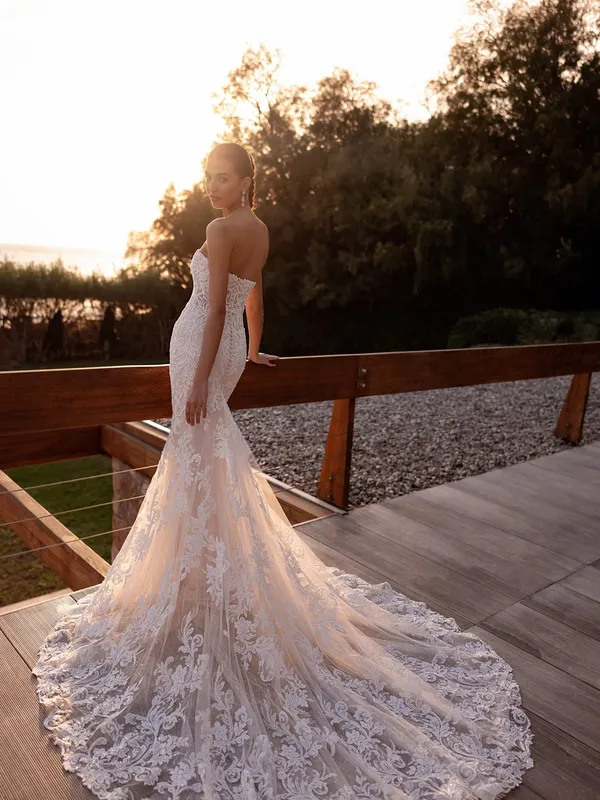
A-line suits almost everyone. Ball gowns are dramatic and formal. Mermaid and fit-and-flare shapes show off your figure. Sheath and slip dresses are simple, light and modern.
Neckline
Sweetheart and strapless are classic. A V-neck lengthens. Off-the-shoulder is romantic. High necks and halters feel modern and elegant.
Fabric
Chiffon, crepe and light tulle stay cool in the heat. Lace adds texture. Satin and mikado are structured and best for cooler months or indoor venues.
Colour
Ivory and off-white suit most skin tones and look warm in sunshine. Blush, champagne and soft nude are popular for a softer look.
If you want to see a few of these in person, Santos y Eva Novios in central Marbella stocks collections from Demetrios, St. Patrick, Nicole and others. Our guide to flower girl dresses has ideas for the little ones too.
Fabric guide
Which fabric suits your day
Fabric decides how a dress moves, how it photographs and how it feels at four in the afternoon in July. It’s often the quickest way to narrow down your shortlist.
Chiffon
Light, soft and floaty, with lovely movement in a sea breeze. A natural choice for beach clubs and summer gardens, though it creases easily, so plan a steam.
Crepe
Smooth, matte and modern. It drapes close to the body for a sleek, minimal look that suits villas, rooftops and hotel weddings.
Organza
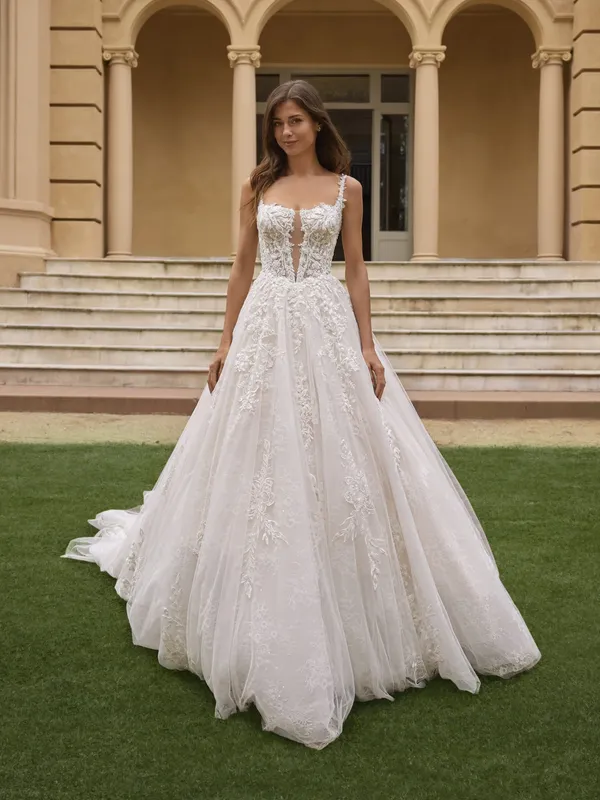
Crisp but airy, catching the light beautifully. It can be layered into a soft A-line or a full fairy-tale skirt for gardens and fincas.
Lace
Endlessly romantic, from delicate Chantilly to heavier corded lace. Lighter laces over a fine lining work well even in the warmer months.
Satin and mikado
Structured and lustrous, holding a strong shape. Beautiful for castles, churches and formal evenings, but warm in the summer sun.
Jacquard, brocade and stretch
Woven patterns add texture and drama for historic venues and winter weddings, while stretch fabrics give comfort and ease of movement all day.
Look at the whole dress, not just the outer fabric: the lining, the number of layers, the boning and any heavy beading all change how warm it feels. A good bridal shop will tell you honestly how a particular gown will cope with your date and venue.
Spanish settings
Dresses for Spanish wedding settings
Spain gives you an extraordinary choice of backdrops, and around Marbella alone you can marry on the beach, at a country finca, in a garden, in a church or in a hilltop castle. Each one suits a slightly different dress.
Beach clubs on the Costa del Sol
Go light and flowing: chiffon, crepe or soft lace, with a short train or none at all, since sand gets everywhere. Flat sandals or barefoot are common. Grooms can swap a dark suit for linen in sand, stone or pale blue. See our beach club venues.
Andalusian fincas and cortijos
Lace, boho and rustic-elegant styles look at home among olive groves and old stone. A slightly longer train works on paved terraces. Grooms suit tan, sage or light grey with an open collar. Try Finca La Concepción or El Cortijo San Francisco.
Garden weddings
Romantic, fairy-tale looks: floral lace, soft tulle, puff or flutter sleeves and a little sparkle in the hair. Watch long trains on grass and choose block heels.
Spanish church ceremonies
Plan for covered shoulders inside the church: a lace bolero, a cape, a long veil or a traditional mantilla, which you can take off for the celebration.
Castles and historic venues
Spain’s castles and old palaces call for drama: a ball gown, a long cathedral train, a structured bodice or a statement veil. Our hilltop Castillo de Monda is made for it.
Villas by the Mediterranean
Sleek and modern works well: a slip dress, a minimal crepe gown or a jumpsuit, perhaps with a dramatic back for photos against the sea.
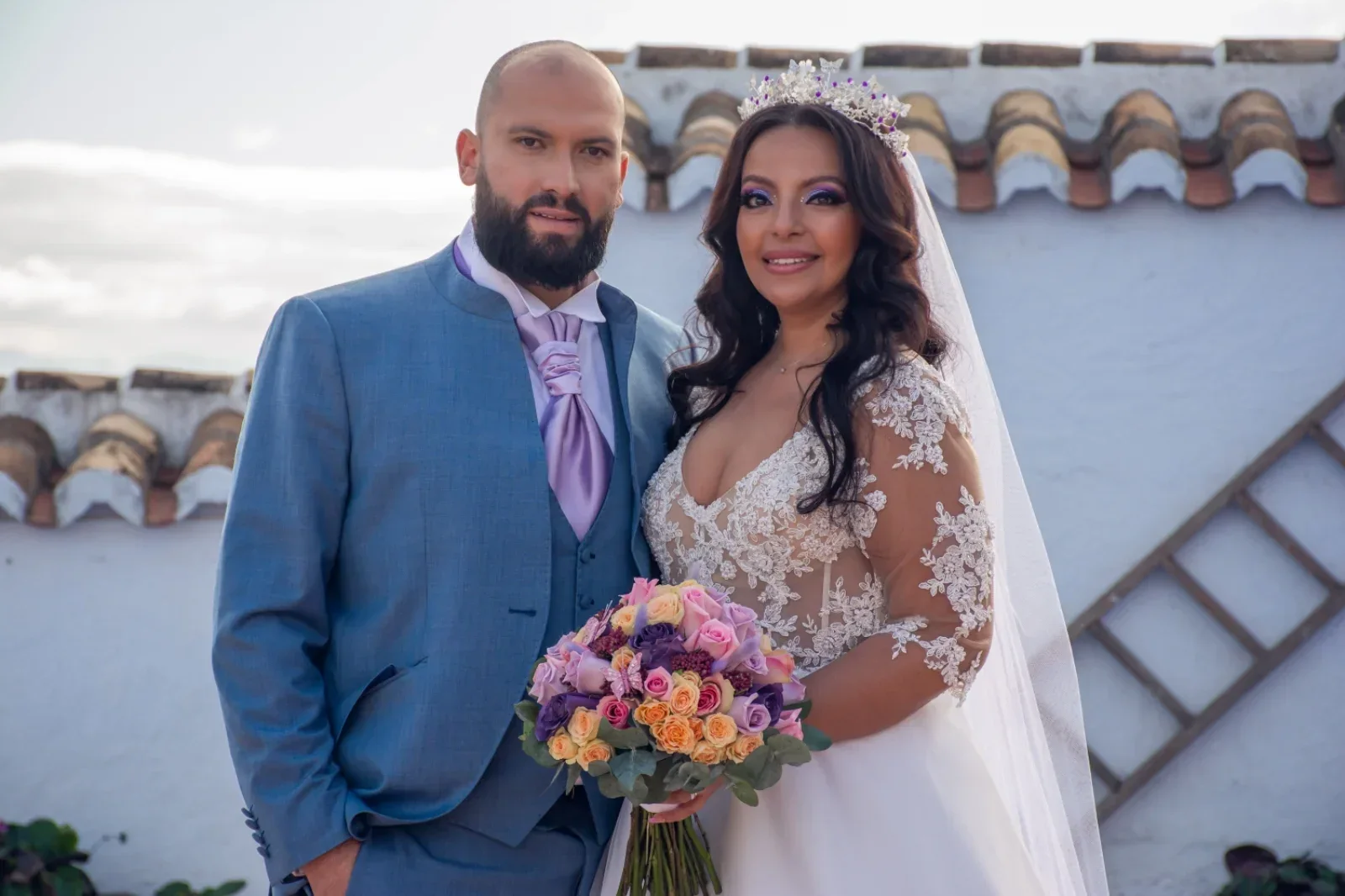
Style ideas
Style ideas for a Spanish wedding
A few looks to show how much the shape and fabric change the mood, and where each one works best on the coast.
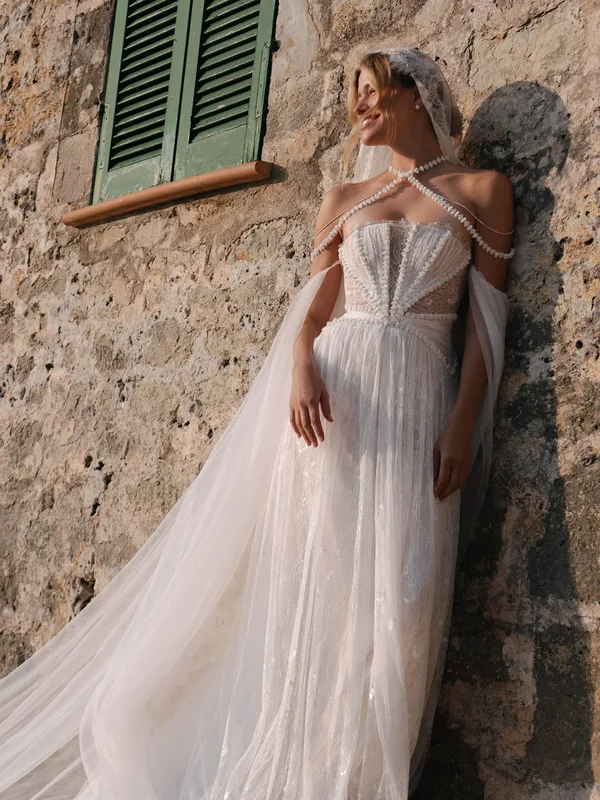
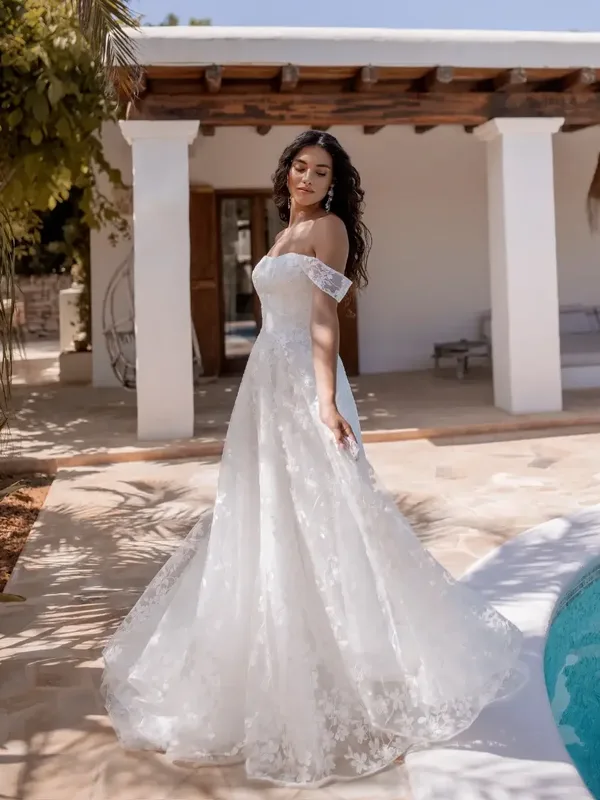
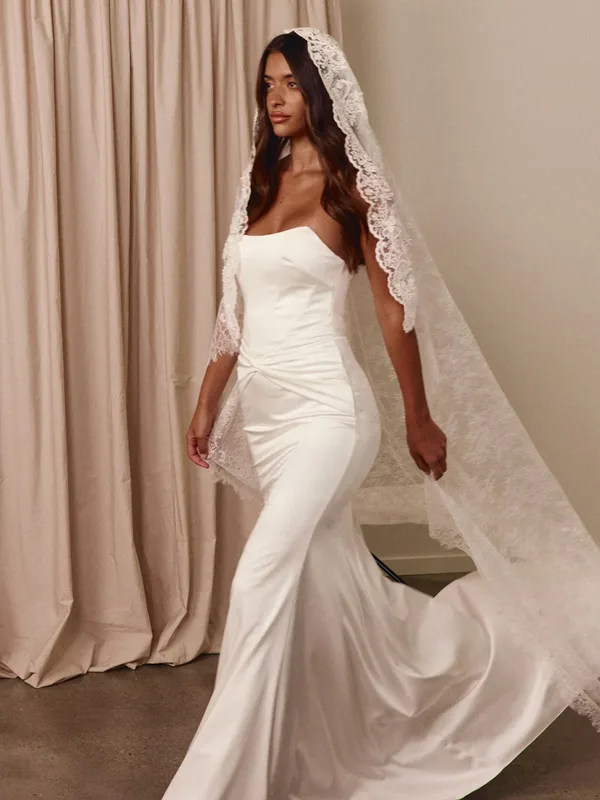
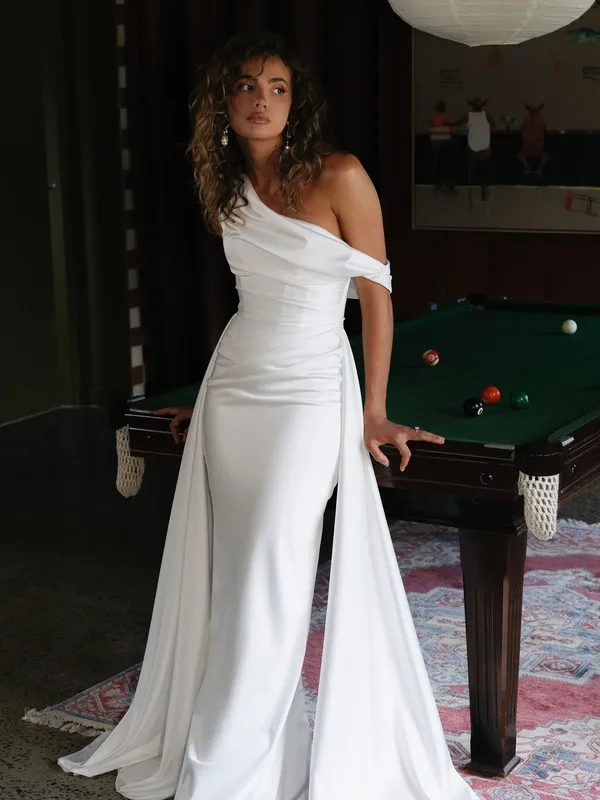
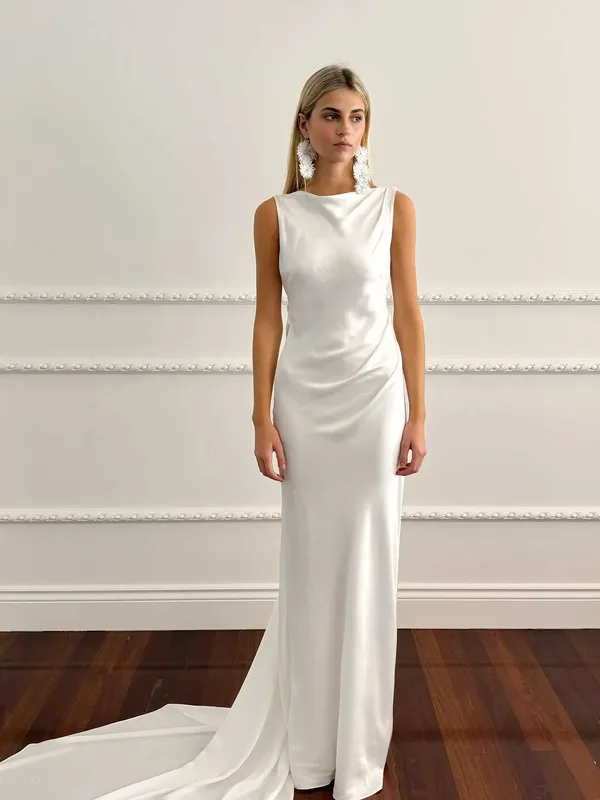
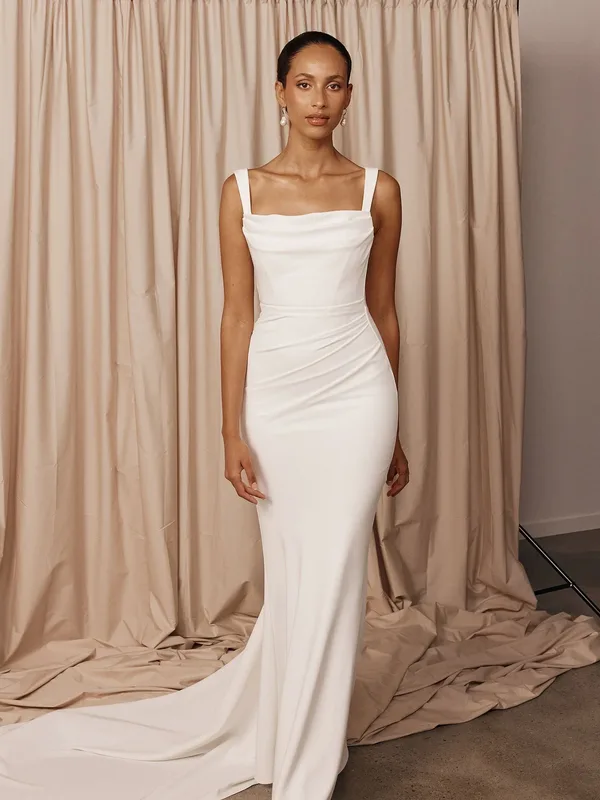
Ready to try some on? See the bridal shops and dressmakers we recommend.
Wedding dresses Marbella →Practical tips
Staying comfortable in the heat
From June to September, afternoons in Marbella are often over 30°C. Whatever style you choose, a few practical choices make a big difference to how you feel by the time the dancing starts.
Breathable layers
Ask for a cotton or silk lining and fewer underskirts. Corsetry can often be lightened without changing the look.
A second look
Many brides change into something shorter or lighter for the party, or choose a gown with a detachable skirt or train.
The ground
Think about sand, grass, cobbles and steps when choosing the train length and your shoes. Bring flats for later.
Timing
Ceremonies around 6pm in summer avoid the worst of the heat and give you golden light for photos.
Beyond the long gown
Short, midi and second looks
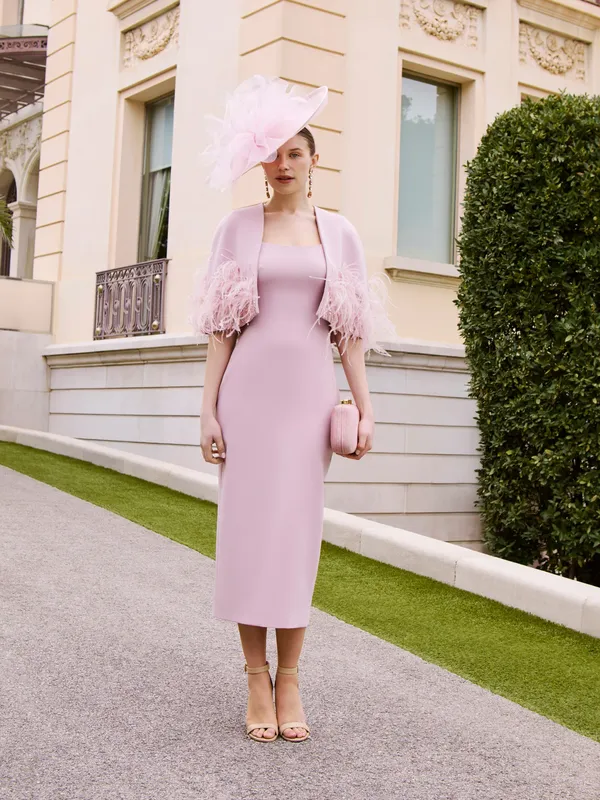
A floor-length gown isn’t the only option. On a hot day by the sea, more brides are choosing a mini or midi dress in ivory satin, crepe or lace: it moves easily, shows off your shoes and keeps you cool through a long afternoon of photos and drinks.
Short dresses also suit civil ceremonies. If you’re marrying legally at home or at the town hall and holding a blessing in Marbella, a chic short dress for the legal ceremony and a long gown for the celebration gives you two looks, and two sets of photos.
Mini and midi
Clean satin, crepe or lace in a mini or midi length feels modern and fresh, and is easy to dance in.
Civil and town hall
A tailored short dress, a jumpsuit or a two-piece suits a registry ceremony or an intimate legal wedding.
The party dress
Change into something shorter or sparkly after dinner. Plan it with your stylist so hair and accessories work with both looks.
Welcome drinks and day two
A white or ivory dress for the welcome party or a pool day after the wedding keeps you in bridal style all weekend.
Whatever you choose for the second look, try it on with your shoes and underwear at a fitting, and have someone ready to help you change so you’re not away from your guests for long.
After dark
Evening weddings and night-time glamour
In midsummer, many couples on the Costa del Sol now hold the ceremony in the early evening, around sunset, and keep the party going until late. A later start avoids the heat of the day and gives you soft golden light for photos, then candlelight and festoon lights for dinner.
An evening wedding is a chance to go more glamorous. Beading, sequins, a high-shine satin or a feather trim catch the light beautifully after dark, and a dramatic back or a long train looks stunning on a terrace lit by candles. Bring a light wrap or a cape for later in spring and autumn, when the evenings can turn cool.
The finishing touches
Shoes, accessories and the practical bits
Your shoes need to cope with the ground as well as look good. Block heels and wedges are far easier on grass, gravel and cobbles than stilettos, and a pair of flat sandals or embellished slides for the dancing will save your feet. If you want something blue, a coloured sole or a blue slingback is an easy way to do it.
Veils
A cathedral-length veil is stunning in a church or castle; a short veil or a lace mantilla suits a garden or beach. Ask your hairstylist how it will stay put in the wind.
Jewellery
Keep it in proportion to the neckline: statement earrings with a strapless or one-shoulder dress, a fine necklace with a V-neck.
Expecting brides
Many designers make maternity bridal styles with stretch, empire waists or soft draping. Order later than usual and allow for a final fitting close to the date.
Underwear and fit
Buy your bra and shapewear before the first fitting, and wear the same pair each time so the dress is altered to the right shape.
Our hair and make-up artists can help you plan your hair around your veil and neckline, and our florists can design a bouquet that suits your dress.
Getting it here safely
Travelling to Spain with your dress
If you’re buying at home and flying to Málaga, a little planning keeps the dress safe and crease-free.
Keep it with you
Carry the dress on board rather than checking it in. Ask your airline about cabin bag sizes and garment bags before you fly, as policies vary and there may be no wardrobe space.
Pack it properly
Travel in its own breathable garment bag, and ask your shop how to fold it if you need to. Beading, structured bodices and full skirts may need extra tissue and care.
Plan the steam
Book a professional steam or press in Marbella for a day or two before the wedding. Don’t experiment with an iron or hotel steamer on delicate fabric.
Arrive early
Land a few days ahead if you can, so a delayed flight or lost bag doesn’t become a crisis, and hang the dress somewhere safe from make-up, food and sun.
Through the year
Dressing for every season
Marbella is warm for most of the year, but it isn’t always hot. Spring and autumn weddings can have warm days and cool, breezy evenings, and from November to March the nights are chilly enough to need cover.
For a cooler-season wedding, long or sheer illusion sleeves, a high neckline, a lace jacket, a faux-fur stole or a cape all look elegant and keep you comfortable. A detachable sleeve or cover-up gives you options whatever the weather does on the day.
Shopping and fittings
Where to buy, and when
Allow 9 to 12 months for most designer dresses, which are made to order, plus two or three months for fittings and alterations. If your engagement is short, ask about ready-to-wear or sample dresses, which can be available within weeks.
If you’d rather shop locally, Santos y Eva Novios in central Marbella dresses brides, grooms and mothers, and Milena Beltrán in Benalmádena designs and makes dresses to measure. See all our bridal shops and dressmakers.
Next steps
Plan your Spanish wedding with us
With the dress chosen, the flowers, hair and styling fall into place much more easily. Browse our wedding venues in Marbella and local suppliers, or tell us about your wedding in Spain and we’ll help with the planning.
Common questions
Wedding dress questions
When should I start shopping for my wedding dress?
Around 9 to 12 months before the wedding. Most designer dresses are made to order and take several months, and you’ll need time for two or three fittings and alterations.
What fabric is best for a summer wedding in Marbella?
Light, breathable fabrics such as chiffon, crepe, organza and light tulle, with a cotton or silk lining. Heavier satin and mikado are better for cooler months or indoor venues.
Do I need to cover my shoulders for a church wedding in Spain?
Usually, yes, inside a Catholic church. A lace bolero, a cape, a long veil or a mantilla works well and can come off for the reception.
How do I bring my wedding dress to Spain?
Carry it on the plane in a breathable garment bag rather than checking it in, check your airline’s cabin rules first, and book a professional steam in Marbella a day or two before the wedding.
What should I wear for a winter wedding in Marbella?
Days are often mild, but evenings from November to March are cool. Long or illusion sleeves, a lace jacket, a stole or a cape keep you warm and look elegant.
What is a mantilla?
A traditional Spanish lace veil, often held in place with a decorative comb called a peineta. It’s a beautiful nod to Spain, and it covers the shoulders for a church ceremony.
Are there Spanish bridal traditions I can include?
Yes. Popular ones include a lace mantilla, orange blossom (azahar) in the bouquet or hair, and a Spanish designer dress. In Spain the groom’s mother, the madrina, often walks him down the aisle.
Can I wear a short wedding dress?
Absolutely. Mini and midi dresses are popular for beach weddings, civil ceremonies and as a second look for the party, especially in the summer heat.
What should I wear for an evening wedding?
Evening and sunset ceremonies suit a little more glamour: beading, sequins, high-shine satin or a dramatic back. Bring a wrap for cooler spring and autumn nights.
What shoes are best for a garden or beach wedding?
Block heels or wedges on grass and cobbles, and flat sandals or bare feet on the sand. Keep a comfortable pair for dancing.
Can I get a dress made in Marbella?
Yes. Milena Beltrán in Benalmádena designs and makes wedding dresses to measure, with around three fittings.
With thanks
Thank you for the images
Our thanks go to the venues and the talented wedding photographers whose work brings these pages to life. All images remain the copyright of the venues and their photographers.
Is this one of your images?
If you took any of the photographs on this website, please send us your details. We would be delighted to credit you by name and feature you as a vendor on weddingvenuesmarbella.com.
Send us your detailsRegister your wedding services with us
Wedding photographer, videographer or supplier? Join our directory of wedding suppliers on the Costa del Sol and reach couples who are planning a wedding in Marbella.
Register your services